
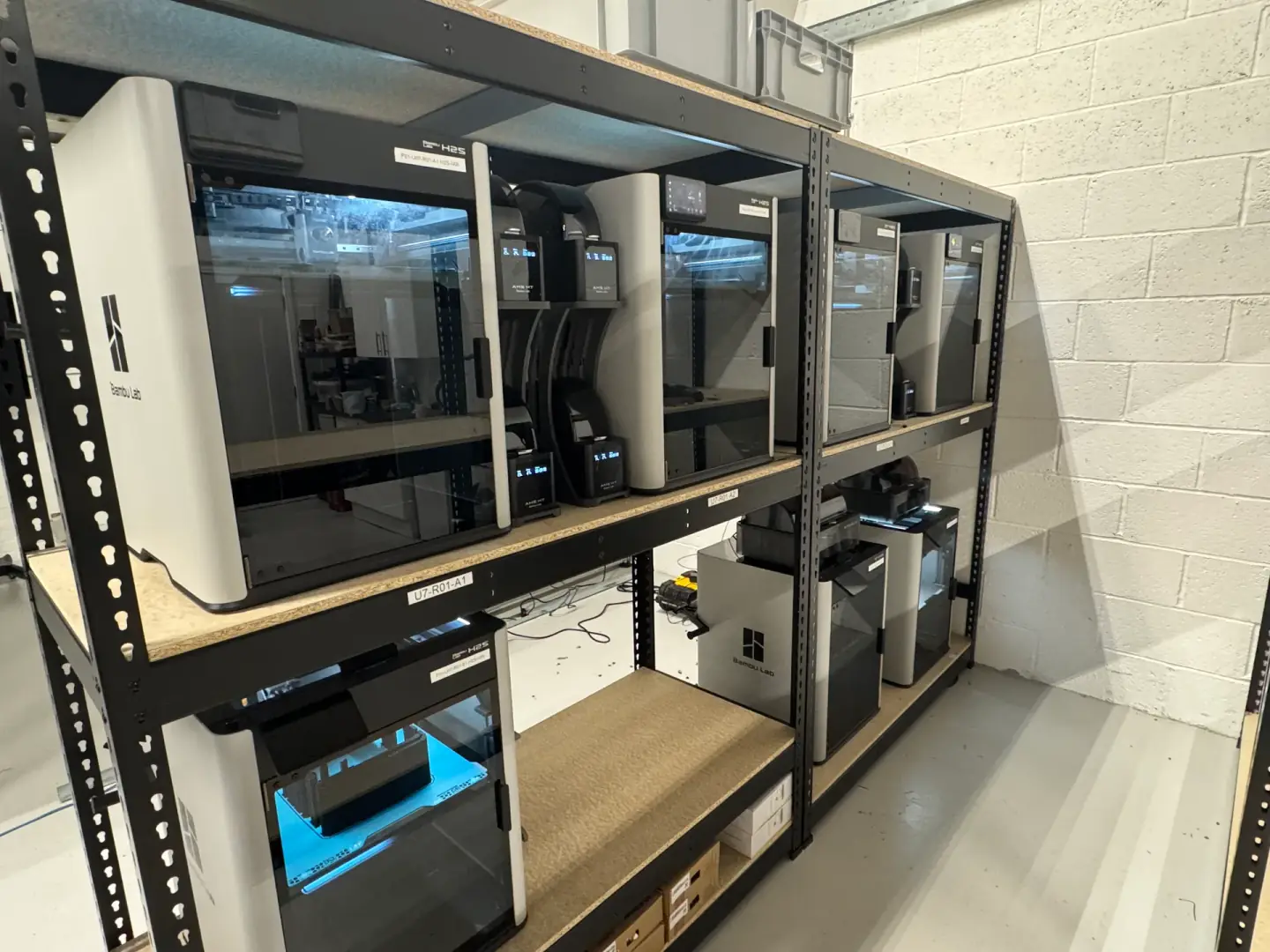
Print your own
A strong route if you already print regularly, enjoy iteration, and want maximum freedom for niche tools, one-offs, or prototype layouts.
See when DIY fitsCookie preferences
We use essential cookies for cart and account security. With your permission, we also use analytics cookies to improve the site. See our Cookie Policy.
Learn
One of the strengths of Gridfinity-compatible storage is that it gives you options. You can print your own inserts and bins, buy ready-made products, or combine both approaches. The best choice depends on whether you want maximum customisation, minimum effort, or a balance of the two.
A strong route if you already print regularly, enjoy iteration, and want maximum freedom for niche tools, one-offs, or prototype layouts.
See when DIY fits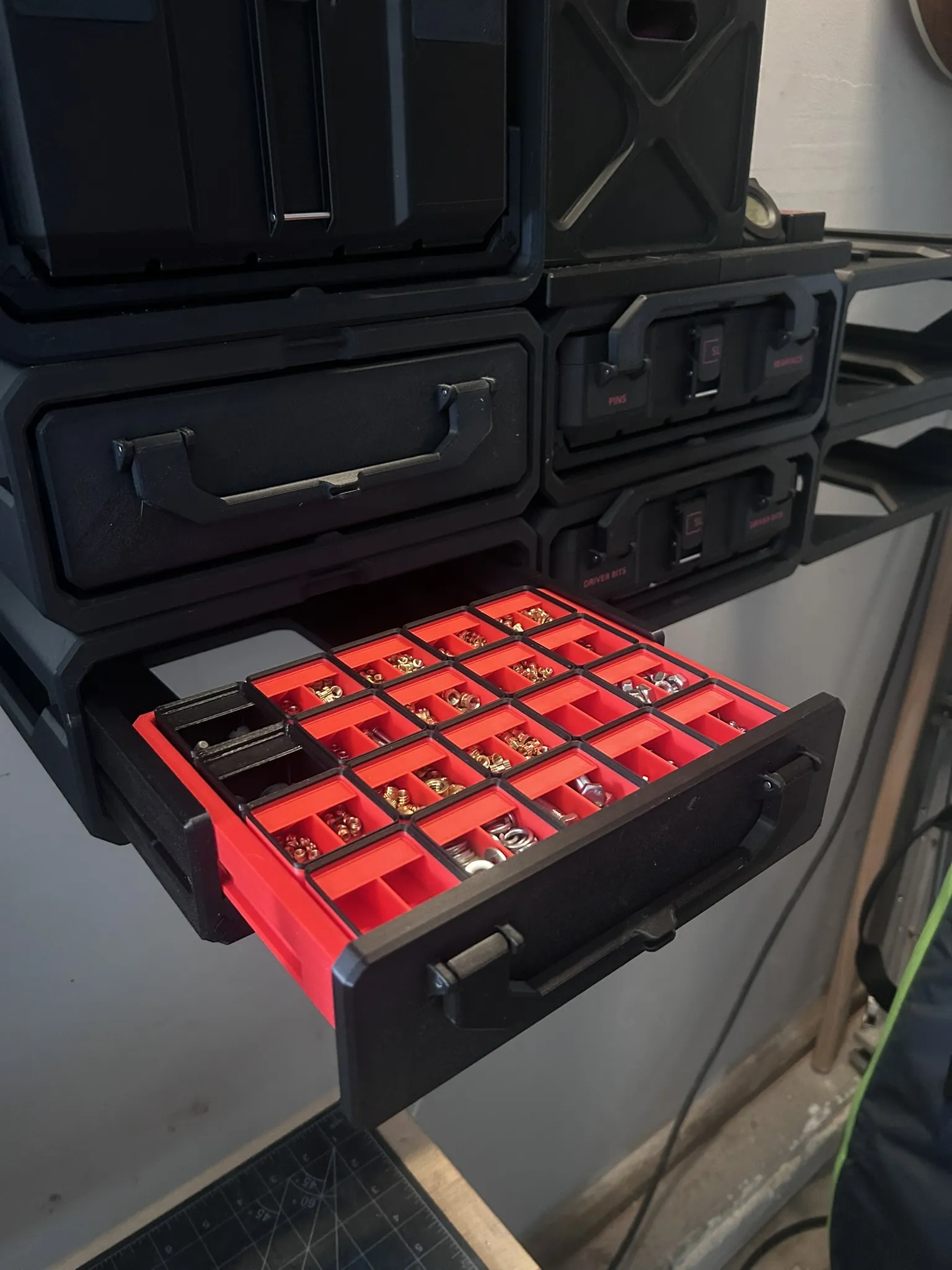
A better fit when you want storage that arrives finished, looks consistent, and is ready to drop into a real workshop setup without extra tuning.
See when ready-made fitsPrinting your own can be an excellent route, especially if you already own a reliable printer and enjoy working within the broader maker side of the Gridfinity ecosystem. It gives you maximum flexibility and makes it easier to create inserts for unusual parts, odd tool shapes, or layouts that do not exist off the shelf.
It is also a good option for experimentation. If you want to test a layout, modify a divider, or try several versions before you settle on the final arrangement, printing your own can be a very practical way to learn what works.
The trade-off is that storage becomes part of the project. That means printer time, slicing, setup, failed prints, reprints, material choice, and the reality that results can vary between machines or batches.
Printing your own is often best for people who enjoy making the storage system as much as using it.
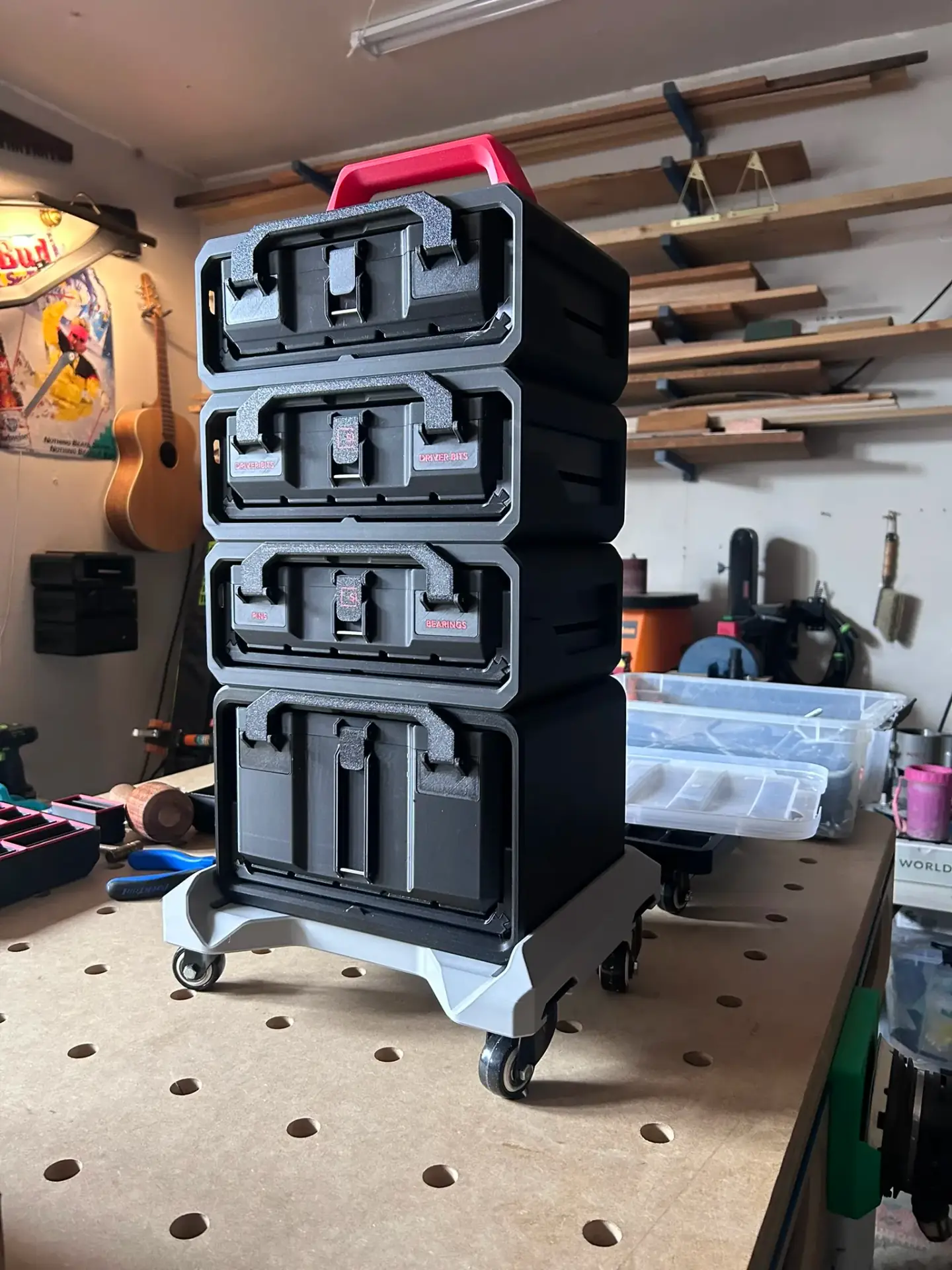
Ready-made products are usually the easier route when the goal is to organise the workspace rather than spend more time building the storage parts themselves.
Ready-made products exist because not everyone wants storage to become another build project. They are there for customers who want a fast route into a practical system with fewer unknowns and a more predictable finish from the start.
That matters even more when you are setting up multiple boxes, rolling out a matched system across a bench, or building storage for workshops, garages, studios, vans, and other real working spaces. The more repeatability matters, the stronger the case becomes for buying rather than printing everything yourself.
If your main question is about size, our size guide andstorage box guide can help you narrow the practical choice quickly.
Ready-made products are often the better choice when convenience, consistency, and time matter more than custom iteration.
| Factor | Print your own | Buy ready-made |
|---|---|---|
| Up-front effort | Higher: choose files, slice, tune, print, and check fit. | Lower: order the parts and start planning the layout. |
| Time to first use | Usually slower, especially if you need multiple inserts or reprints. | Faster once delivered and easier to roll straight into use. |
| Customisation | Highest, especially for niche tools or unusual parts. | Curated and practical rather than fully open-ended. |
| Consistency | Depends on printer setup, material, and batch variation. | High across matching sets and repeat orders. |
| Print failures and trial and error | Often part of the process. | Minimal. |
| Finish | Depends on printer quality, settings, and post-processing. | More consistent and workshop-ready. |
| Scalability across multiple boxes | More time-intensive as quantities grow. | Easier when you need matching sets quickly. |
| Best for | Makers, tinkerers, prototypes, and niche one-offs. | Customers who want a finished solution with less setup. |
| Convenience | Lower. | Higher. |
| Long-term repeatability | Good if your print setup stays dialled in and repeatable. | More predictable across full systems and later additions. |
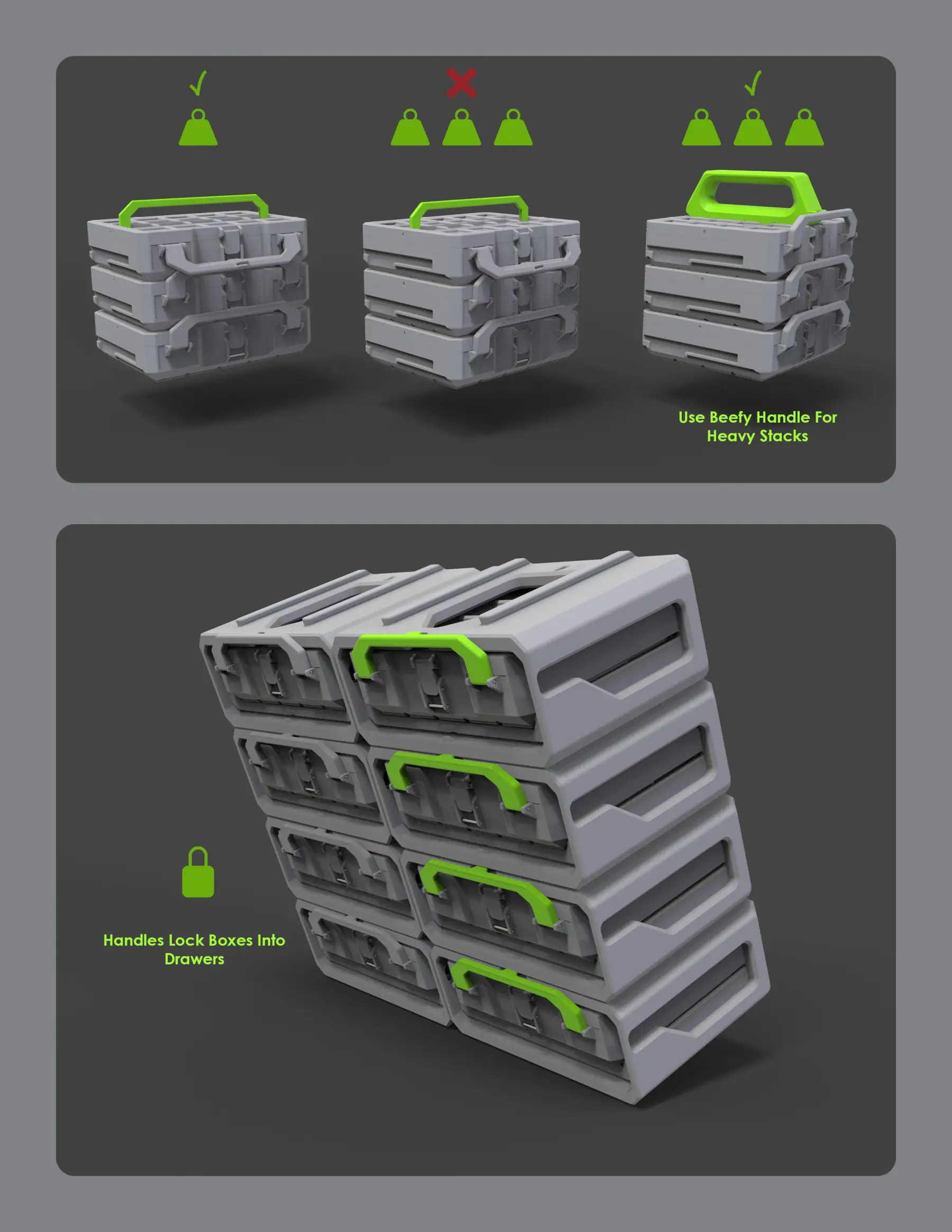
A hybrid route lets you buy the core system ready-made, then add printed niche inserts only where customisation is genuinely useful.
Many customers do not need to choose only one route. In practice, a hybrid workflow is often the most sensible one: use ready-made storage for the core system, add ready-made insert packs for the most common jobs, and print your own niche inserts where custom geometry or one-off tooling makes the effort worthwhile.
That approach keeps the main system fast to build and easy to scale, while still leaving room for the parts of the layout that are genuinely worth customising.
Likely best fit: print your own, or hybrid
If the design process is part of the appeal, printing your own can be a good fit. A hybrid setup still makes sense if you want ready-made boxes with a few specialist inserts.
Likely best fit: buy ready-made
If your goal is to get organised quickly and keep the bench moving, ready-made storage usually makes more sense than dedicating hours of print time to storage parts.
Likely best fit: hybrid or ready-made
A hybrid route often works well here: use a reliable ready-made core system, then print niche inserts only where custom tool control or layout precision adds real value.
Likely best fit: buy ready-made
If convenience, consistency, and finish matter most, buying ready-made is usually the more practical route.
Graphite Modular is aimed at customers who want a finished, ready-to-use storage solution built around Gridfinity-style workflows, without needing to print every part themselves. The focus is on practical storage, clean design, durability, and ease of use in real workspaces.
That means Graphite Modular fits best when you want a dependable core system that works well with broader Gridfinity-based organisation, while still leaving room for printed specialist inserts where they make sense.
If you are still deciding where to start, it helps to read what Gridfinity is, compare footprints and heights, and then use our storage box guide to match the setup to the way you work.
Enclosed, stackable box systems designed around Gridfinity-style layouts and workshop use.
Purpose-built insert layouts for faster setup when you want organised storage straight away.
Surface, wall, and fixed-position options for benches, shelves, and workshop zones.
Drawer frames and plates for pull-out storage where bench space is tight.
Starter and workflow-led kits when you want the quickest route into a complete setup.
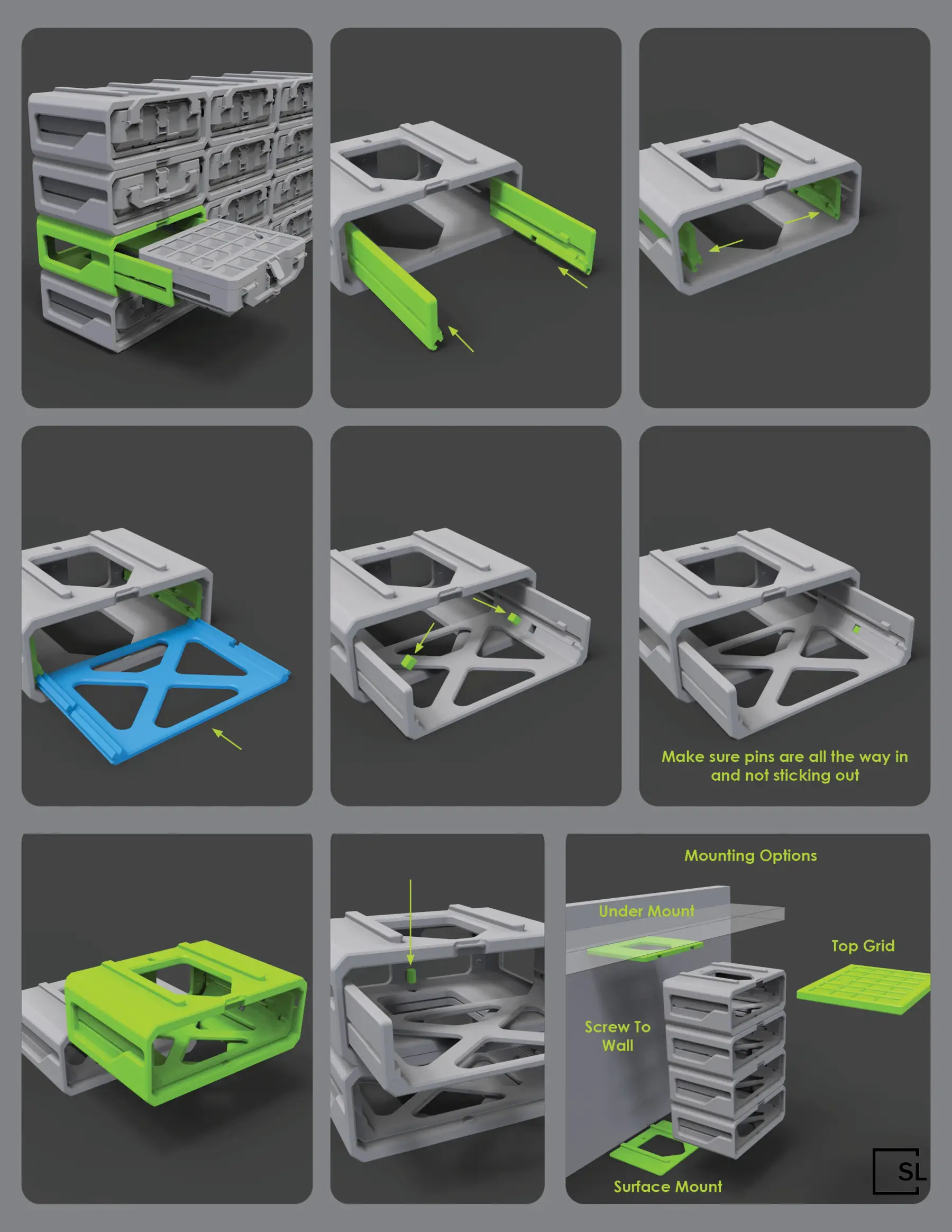
Graphite Modular is the practical route when you want storage that feels finished, repeatable, and ready for everyday workshop use.
It can be, especially if you already own a well-tuned printer and know exactly what you want to make. Once you factor in machine time, failed prints, material choice, and iteration, the savings are not always as large as they first appear.
Buying ready-made usually makes more sense when time, consistency, and convenience matter more than custom iteration. It is often the better route for full workshop setups, repeatable systems, and customers who want storage rather than another project.
Yes. For many people, a hybrid setup is the most practical route: use ready-made boxes and common insert packs for the core system, then print your own niche inserts where customisation adds value.
No. You can use ready-made products designed around Gridfinity-style storage workflows without printing your own parts.
Graphite Modular products are designed around Gridfinity-style storage workflows and work well within broader Gridfinity-compatible setups. Compatibility should still be treated as intended compatibility rather than a guarantee across every third-party variation.
That is where a hybrid approach often works best. Use a ready-made core system for everyday storage, then print only the specialist inserts that need a custom fit.
It often is, especially when you want a cleaner finish, predictable repeatability, and a system that can be rolled out across multiple boxes, benches, or work zones without extra print time.
Start with a ready-made storage box or insert pack if you want a fast route into the system. If you want more context first, read our guides on what Gridfinity is, how sizes work, and how to choose the right storage box.
Next step
Whether you want a fully ready-made system or a hybrid setup with custom printed inserts, Graphite Modular gives you a practical starting point for organised, workshop-ready storage.